
10Gb/s SFP+ Fiber Port Ethernet Adapter
4.3Editor score
Intel 82599ES controller
10Gb/s SFP+ port
Compatible with NAS systems
This guide compares the top ten fiber optic network interface card options available for desktops and servers, evaluating performance, compatibility, and
Finding the right fiber optic network interface card can transform your networking capabilities significantly. Whether you need high-speed data transfers for a home server or enterprise-grade connectivity for a data center, selecting the appropriate NIC is crucial for performance and stability in modern computing environments.
We have thoroughly analyzed the leading options on the market today to bring you this curated list. Our comparison considers chipset performance, port types, compatibility with various operating systems, and real-world reliability based on user feedback and technical specifications provided by manufacturers.
Each pick in this guide highlights specific strengths tailored to different user needs and budgets. Please note that prices and availability can change frequently, so verify the current details before making your final purchase decision to ensure you get the best value available.
4.3Editor score

5.0Editor score
4.9Editor score
The following table provides a side-by-side comparison of the ten top-rated fiber optic network interface cards currently available, highlighting their key specifications and ideal use cases to help you make an informed decision quickly.


The StarTech 2-Port GbE SFP Network Card stands out as the Editor's Choice due to its robust Intel I350 chipset and versatile design. With a perfect rating, it delivers high-performance connectivity for desktops and servers requiring reliable fiber or copper options without vendor lock-in.
We may earn a commission when you buy through this link, at no additional cost to you.
This card features two open SFP slots that accept any MSA-compliant modules or direct attach copper cables. It supports IPv4 and IPv6 along with TCP/UDP offloading to reduce CPU load. The built-in heatsink ensures the controller chip stays cool during sustained data transfers.
While it is limited to Gigabit speeds rather than 10GbE, the reliability and compatibility make up for it. It works across Windows Server, Linux, and VMware environments. The included low-profile bracket ensures it fits into smaller cases easily without issues.
Ideal for businesses and power users needing stable network expansion, this card offers the best balance of performance and features. It is the top recommendation for those prioritizing long-term reliability and broad module compatibility over raw speed.
Powered by the proven Intel I350-AM2 chipset, this card ensures stable throughput and efficient packet processing for demanding network tasks.
Open SFP slots allow you to choose from a wide variety of optical transceivers or copper modules based on your specific cabling needs.
We may earn a commission when you buy through this link, at no additional cost to you.
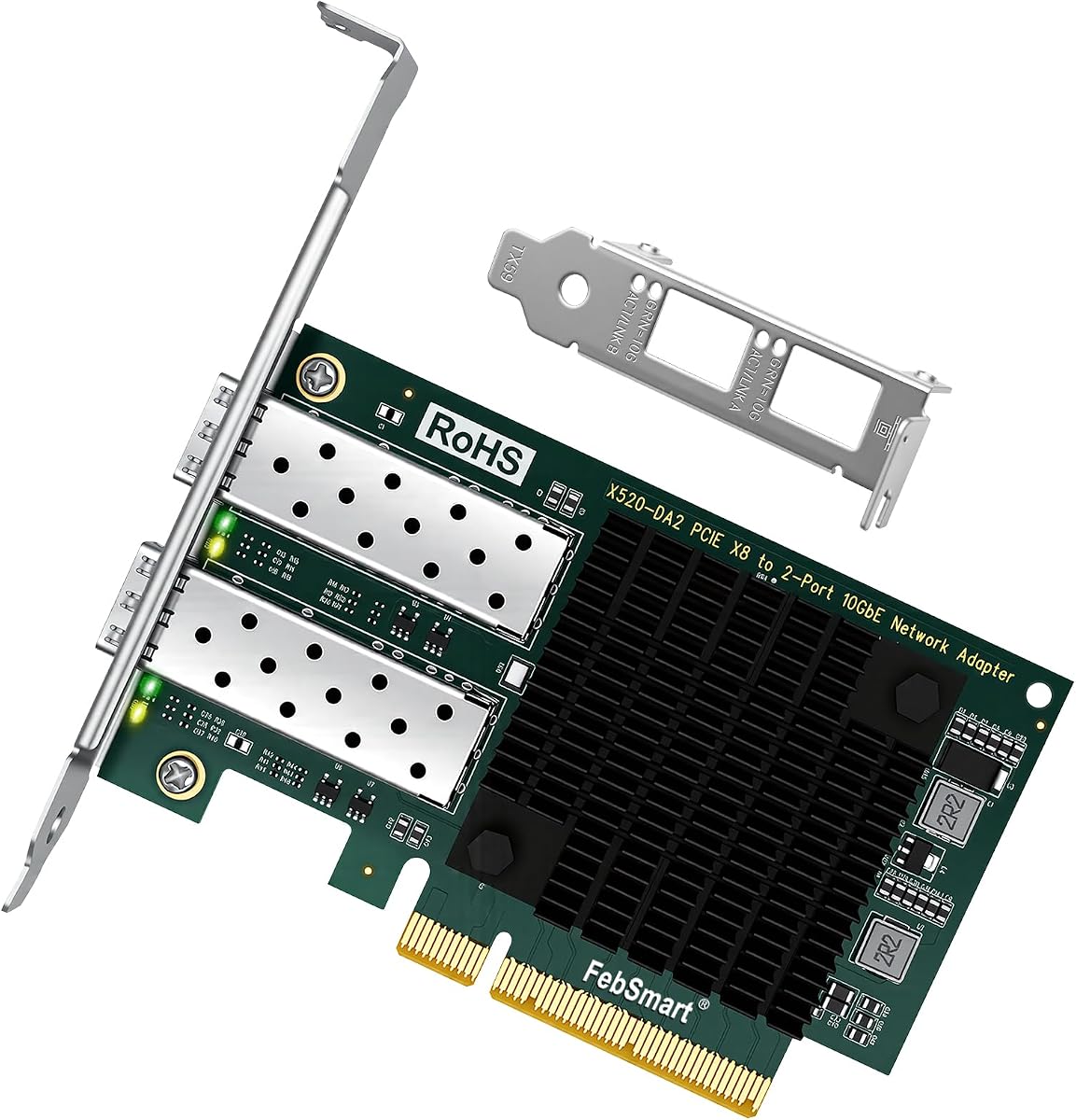
This adapter offers the best value for users seeking 10GbE speeds on a budget. Using the trusted Intel 82599ES controller, it provides unified LAN and SAN connectivity ideal for gaming, streaming, and storage applications without breaking the bank.
We may earn a commission when you buy through this link, at no additional cost to you.
It features a PCIe x4 interface compatible with x4, x8, and x16 slots. The card supports advanced virtualization technologies and traffic management features. It is particularly well-suited for network attached storage systems needing faster data access speeds.
Users must install drivers on Windows 11 or 10, but server versions often support it plug-and-play. While it does not fit in PCIe x1 slots, the included brackets allow installation in various chassis sizes. The performance is stable for home labs and small offices.
For those needing high-speed networking without premium costs, this adapter is the top budget pick. It balances cost and performance effectively, making 10GbE accessible for a wide range of desktop and server scenarios.
The 82599ES chipset ensures consistent 10GbE throughput and supports advanced features like SR-IOV for virtualized environments efficiently.
Included full height and low profile brackets allow easy installation in standard towers or compact 1U and 2U rack servers.
We may earn a commission when you buy through this link, at no additional cost to you.
The CX4121A represents the pinnacle of performance with dual 25GbE ports and Mellanox technology. Rated highly by users, it is designed for virtualization and storage servers requiring ultra-fast data transfer and low latency networking capabilities.
We may earn a commission when you buy through this link, at no additional cost to you.
This adapter supports RDMA over RoCE to reduce CPU load during heavy storage operations. It features advanced overlay network support with VXLAN and NVGRE protocols. The PCIe 3.0 x8 interface ensures sufficient bandwidth for both ports simultaneously without bottlenecks.
Installation requires a PCIe x8 slot but auto-negotiates down to x4 if needed. It works with Windows and Linux kernel-based systems seamlessly. The passive heatsink needs good airflow in the case to maintain optimal temperatures under load.
For professionals building high-end servers or data centers, this is the ultimate choice. It delivers premium speeds and features that standard 10GbE cards cannot match, justifying the higher cost for demanding enterprise workloads.
The ConnectX-4 Lx controller provides industry-leading throughput and low latency for next-generation cloud and storage platforms.
Remote Direct Memory Access over Converged Ethernet enables efficient data movement between servers with minimal CPU intervention.
We may earn a commission when you buy through this link, at no additional cost to you.
Asus delivers a sleek and powerful 10Gbps adapter ideal for gaming and high-speed online tasks. The card supports fiber optic technology for longer cable runs and immunity to electromagnetic interference. Its built-in heatsink maintains cool temperatures during intense performance sessions.
We may earn a commission when you buy through this link, at no additional cost to you.
The SFP+ cage allows both fiber and direct-attach copper connections giving users flexibility. QoS technology prioritizes important streams or game traffic automatically to reduce lag. Operating and storage temperature ranges are generous ensuring reliable use in various environments.
While it costs more than basic options, the build quality and speed justify the price for enthusiasts. It fits PCIe x4 slots easily and supports both copper and fiber modules. Proper cooling and transceiver selection are key to unlocking its full potential.
This adapter is perfect for gamers and creatives needing fast local network speeds. It combines style and performance with practical features that enhance the user experience without requiring complex configuration steps.
The SFP+ cage accepts both fiber optic modules and copper cables allowing you to choose the best medium for your setup.
Built-in QoS boosts bandwidth for critical tasks like gaming or streaming to avoid network congestion automatically.
We may earn a commission when you buy through this link, at no additional cost to you.
10Gtek offers a stable single port solution using the original Intel 82599EN controller. It is designed for data center environments requiring reliable 10GbE connections. The card supports storage over Ethernet protocols like iSCSI and FCoE for enterprise needs.
We may earn a commission when you buy through this link, at no additional cost to you.
It uses a PCIe X8 lane which fits X8 and X16 slots. The package includes both full and low profile brackets for easy installation. A three year warranty and lifetime support add confidence to the purchase for small business users.
Users must ensure Win10 drivers are set up correctly for Win11 compatibility. It does not support speeds below 10G which might be limiting for some switches. However the stability and vendor support make it a solid choice for dedicated high-speed links.
This NIC is suitable for servers needing a single robust connection. It balances compatibility and speed well for those who trust Intel chipsets and need reliable support from the manufacturer.
The 82599EN controller provides reliable throughput and supports virtualization features for server stability.
Includes a three year warranty and lifetime technology support to ensure long-term usage and troubleshooting help.
We may earn a commission when you buy through this link, at no additional cost to you.
This card uses the Realtek RTL8127 controller with exclusive RealWoW technology for stable data transmission. It features a PCIe Gen4 x1 lane design ensuring wide compatibility with most computers and servers. The speed increases tenfold over standard Gigabit adapters for demanding tasks.
We may earn a commission when you buy through this link, at no additional cost to you.
It is compatible with Windows 10/11 and Linux kernels up to 6.15. The card supports PXE and Jumbo Frames for professional network requirements. Including both full height and low profile brackets makes installation flexible across different cases.
The limitation on Linux kernel versions might affect some advanced users but covers most mainstream distributions. The 10G/s speeds deliver dramatic improvements for local transfers. Drivers are easily downloaded via QR code for convenience.
Ideal for users wanting modern interface technology without needing multiple PCIe lanes. It offers a cost-effective way to upgrade to 10G speeds while maintaining compatibility with standard system slots.
Exclusive RealWoW technology enhances data transmission stability and supports wake-up diagnostics efficiently.
A single lane PCIe Gen4 design ensures compatibility with x1, x4, x8 and x16 slots for easy installation.
We may earn a commission when you buy through this link, at no additional cost to you.
This card provides the genuine Intel 82599EN silicon without vendor lock-in on the SFP+ cage. It supports sustained 10 Gigabit throughput for NAS and VM migrations. The flexibility with third-party optics makes it a versatile choice for home labs.
We may earn a commission when you buy through this link, at no additional cost to you.
It is detected by many systems like Proxmox and TrueNAS without extra drivers. On Windows it works with the Intel Ethernet Adapter Complete Driver Pack. The four PCIe lanes leave room on the board for other components and fit x4 x8 or x16 slots.
The passive heatsink runs warm by design so case airflow is necessary. Jumbo frames up to 9KB run in hardware for better efficiency. Users should clip a small fan if building a silent system to avoid overheating during long transfers.
Perfect for open-source enthusiasts and budget-conscious pros. It delivers proven Intel performance with the freedom to choose any compatible optics for maximum flexibility and cost savings.
Third-party optics connect freely without rejection by branded cards offering cost savings and flexibility.
Detected by many NAS and virtualization platforms without driver steps saving installation time.
We may earn a commission when you buy through this link, at no additional cost to you.
This adapter offers high-end performance with dual ports suitable for large data analytics. The Mellanox controller supports advanced protocols like NVGRE and VXLAN for complex networks. It ensures 25GbE performance simultaneously on both ports without bottleneck.
We may earn a commission when you buy through this link, at no additional cost to you.
Plug and play works on Windows 11 and 10. Compatible with many Linux distributions and FreeBSD systems. Open Fabrics support ensures compatibility with transceivers and cables for easy deployment in enterprise environments.
The PCIe interface auto-negotiates down to x4 if a full x8 slot is unavailable. It supports Jumbo frames up to 9.6KB for better efficiency. The card is compatible with SFP28 transceivers for maximum flexibility.
Ideal for storage servers needing high bandwidth. The advanced features ensure scalability for cloud platforms and data analytics workloads requiring robust networking solutions.
Supports NVGRE and VXLAN protocols for complex virtualization and network segmentation needs efficiently.
Compatible with Open Fabrics Enterprise Distribution for seamless driver and firmware support.
We may earn a commission when you buy through this link, at no additional cost to you.
This card provides a cost-effective way to get 10Gb speeds using the Intel 82599EN chip. It comes with a multimode optical module which adds immediate value for those building a fiber network. The PCIe X1 interface fits smaller slots and saves space.
We may earn a commission when you buy through this link, at no additional cost to you.
Gold-plated fingers ensure reliable contact and reduce disconnection issues. It supports auto adaptive transmission rates for flexibility. The card offloads TCP tasks to free up CPU resources for other applications during heavy traffic times.
Installation is straightforward with included brackets for different chassis sizes. It is widely compatible with Windows, Linux and FreeBSD systems. The passive cooling requires proper airflow to maintain performance during long sessions.
Great for workstation upgrades needing fast fiber connectivity. The included module saves extra costs making it a convenient all-in-one solution for immediate deployment.
Comes with a pre-installed multimode module allowing immediate connection to existing fiber cabling.
Durable gold plating on connectors ensures stable electrical contact and extends service life.
We may earn a commission when you buy through this link, at no additional cost to you.
While not fiber optic this adapter offers 10GBase-T speeds via standard Ethernet ports. It is ideal for users who prefer copper cabling. The card delivers extreme speeds ten times faster than typical adapters for smooth internet access.
We may earn a commission when you buy through this link, at no additional cost to you.
It negotiates speeds automatically from 100 Mbps to 10 Gbps ensuring compatibility with older switches. A CAT6A cable is included to maximize performance. QoS prioritizes gaming traffic to avoid congestion during online matches.
The low-profile bracket allows installation in mini towers. It supports Windows Server and Linux widely. The two-year warranty and 24/7 technical support provide peace of mind for home and small office setups.
Choose this if you need speed without fiber. It simplifies setup with familiar cables and offers reliable performance for most desktop and workstation networking needs.
Uses standard copper cables to deliver 10Gbps speeds without requiring special fiber modules.
Automatically adjusts to lower speeds like 2.5G or 1G ensuring connection with various switches.
We may earn a commission when you buy through this link, at no additional cost to you.
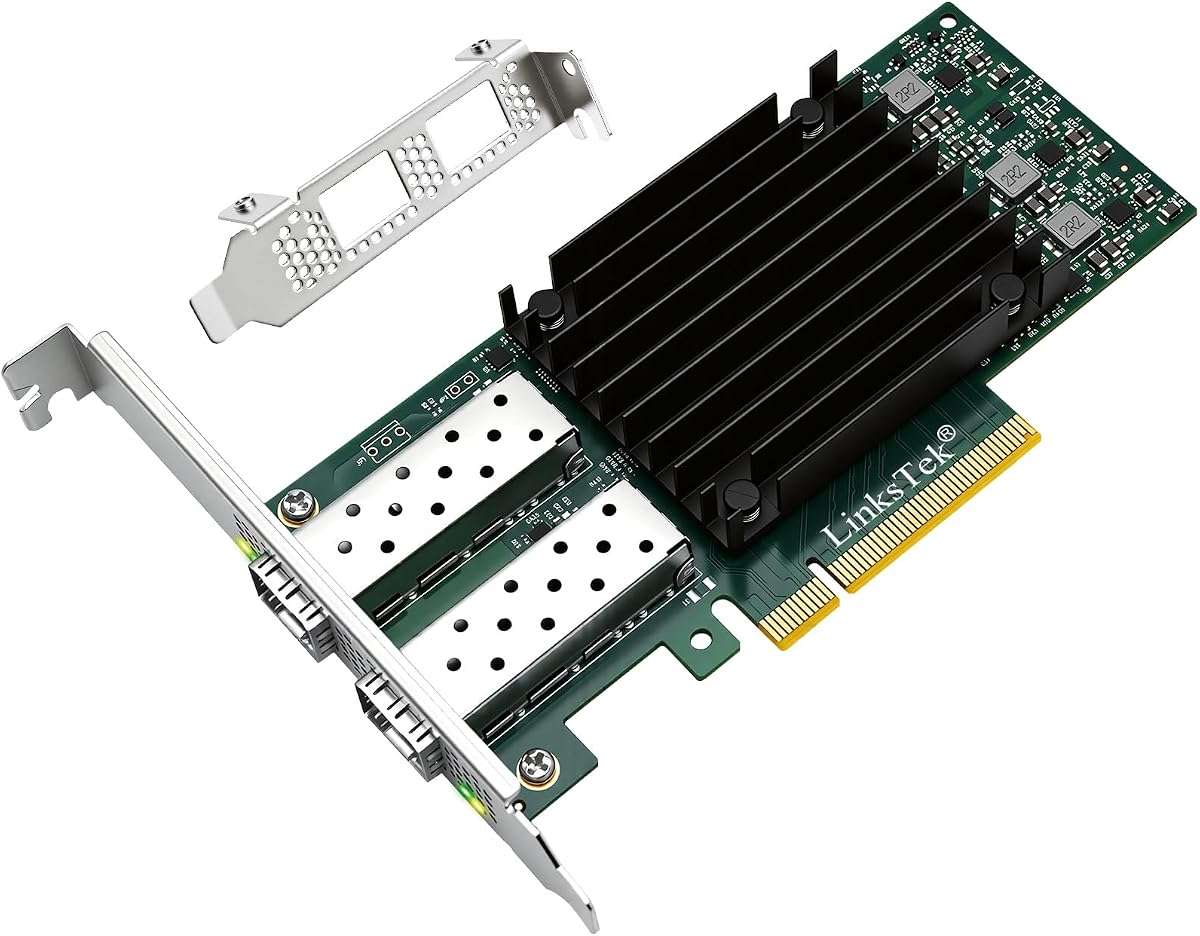
This adapter delivers stable 10Gb/s connectivity via two ports for redundancy or aggregation. The Intel controller handles LAN and SAN tasks efficiently for desktops and servers. It is ideal for virtualization environments needing reliable bandwidth.
We may earn a commission when you buy through this link, at no additional cost to you.
It uses PCIe 2.0 x8 interface delivering 40 Gbps total bandwidth. Supports intelligent offloads and SR-IOV for better VM performance. Drivers are free on Windows Server but required on Windows 10. Linux installs IXGBE driver easily.
The card includes brackets for standard and low profile PCs. It works with various transceivers and cables for flexibility. The low profile bracket mounted or included allows versatile mounting options.
Great for servers needing dual high-speed links. It balances price with features making it a strong contender for home labs and small businesses.
Two SFP+ ports allow link aggregation or redundancy for critical network connections.
Offloads storage and virtualization tasks to free up CPU resources for other apps.
We may earn a commission when you buy through this link, at no additional cost to you.
Selecting the right fiber optic network interface card involves evaluating several technical factors to ensure compatibility and performance for your specific needs.
Determine if you need 10Gbps, 25Gbps, or Gigabit speeds. Check whether the card uses SFP, SFP+, or SFP28 ports which dictate compatible transceivers and cables.
Match port speed to your switch and cabling to avoid bottlenecks and ensure full performance.
Look for well-supported chipsets like Intel or Mellanox for better driver stability across operating systems. Verify the card works with your OS and virtualization platform.
A reliable chipset ensures long-term support and avoids conflicts with system drivers.
Check your motherboard for available PCIe slots. Cards may require x1, x4, or x8 lanes so ensure your slot supports the card's requirements without compromising other components.
Ensure sufficient PCIe lanes and version compatibility for optimal data transfer speeds.
Verify Linux kernel versions and Windows versions supported. Some cards need specific drivers or have limitations on newer OS updates.
Confirm OS compatibility to avoid installation issues and ensure seamless integration with your setup.
Some cards lock out third-party optics while others accept MSA-compliant modules. Choose unlocked options to save costs on cables.
Opt for vendor-free cages to reduce expenses when purchasing optical modules and cables.
High-speed cards generate heat. Check for heatsinks and cooling requirements. Ensure your case has airflow or fans to keep the card cool.
Proper cooling prevents overheating and ensures consistent performance during long transfers.
If using VMs, check for SR-IOV, VMDq, or PXE boot support. These features improve network efficiency in virtual environments.
Prioritize virtualization-ready features if running multiple virtual machines on your server.
Review warranty length and technical support options. A good warranty protects against defects and ensures help when needed.
Choose products with solid support for long-term reliability and peace of mind.
Install the card into a compatible PCIe slot and secure it with the appropriate bracket. Connect optical modules or cables carefully to avoid bending the fibers.
Install drivers specific to your operating system and configure the network settings. Enable features like Jumbo Frames or QoS as needed for performance.
Keep the card clean and ensure airflow around it. Avoid touching optical ports directly to prevent dust damage and ensure stable connections.
SFP ports support up to 1Gbps while SFP+ ports support up to 10Gbps. SFP+ cards are backward compatible with SFP modules but at reduced speeds. Always match port type to your cabling and transceiver needs.
Many cards require manual driver installation on Windows 11 even if they work on servers. Check the manufacturer support page for the latest drivers to ensure full functionality without issues.
Yes using direct attach copper DAC cables allows copper connections via SFP+ ports. These are cheaper and convenient for short distances but lack the range of fiber optic cables.
This could be due to cable speed limits switch capabilities or driver issues. Ensure your transceivers and cables support 10G and update your drivers to resolve speed negotiation problems.
PCIe 2.0 x4 provides enough bandwidth for 10Gbps cards. Newer 10G cards may recommend PCIe 3.0 for optimal performance but 2.0 remains widely compatible for most setups.
Use a lint-free cloth or canned air to gently clean dust from optical ports. Avoid touching the lens surface directly and inspect for scratches before installing new modules.
SR-IOV allows virtual machines to bypass the hypervisor for direct network access. This improves performance and reduces CPU load in virtualized environments making it essential for high-traffic VMs.
Yes by replacing your current card with a 10G model and updating your network switch or using DAC adapters. Ensure your case has space for the new card and necessary cooling.
Whether you need single or dual ports for your server or desktop the options listed here cover a wide range of speeds and budgets. From the reliable StarTech card to high-performance Mellanox solutions there is a fit for every need.
Prioritize chipset support and port types that match your existing cabling and switch capabilities. Ensure compatibility with your operating system to avoid installation headaches and ensure smooth long-term use.
Prices fluctuate frequently so check current listings before purchasing. Investing in the right card now can future-proof your network and deliver the speed you need for years to come.