
Zoom H1 XLR 2-Channel Recorder
4.5Editor score
Two XLR/TRS inputs
OLED waveform display
SDXC support up to 1TB
This guide compares the top audio field recorders for film production, highlighting key features like timecode sync, input options, and recording quality for
Finding the right audio field recorder is crucial for filmmakers who demand pristine sound quality on set. These devices capture dialogue and ambient noise with precision, ensuring your production sounds professional.
We evaluated ten top models based on input flexibility, recording format, and durability. Each option offers unique strengths for run-and-gun shoots or complex multi-track productions requiring reliable synchronization.
Our reviews detail performance, usability, and real-world applications for every pick. Keep in mind that availability and pricing may fluctuate, so verify current details before making your final purchase decision today.
4.5Editor score

4.7Editor score
4.6Editor score
This side-by-side comparison highlights the core specifications of each recorder to help you quickly identify the model that best fits your specific filming and audio production needs.



The Zoom F6 stands out as a top choice for filmmakers needing professional audio without excessive bulk. It earns high marks for its 32-bit float capability and six XLR inputs for diverse setups.
We may earn a commission when you buy through this link, at no additional cost to you.
Its dual AD converters handle massive dynamic range effortlessly, capturing whispers to explosions without clipping. The timecode I/O ensures frame-accurate synchronization, vital for multi-camera shoots and post-production workflows.
While powerful, the interface requires some study to master all features. The price is higher than entry-level gear, but the reliability and flexibility justify the investment for serious productions.
Ideal for location sound professionals and indie filmmakers needing versatility. It balances portability with robust recording features, making it a reliable partner for demanding audio capture tasks.
The 32-bit float recording ensures you never clip audio, even if levels spike unexpectedly during a take.
Integrated timecode I/O allows seamless syncing with cameras, reducing post-production headaches significantly.
We may earn a commission when you buy through this link, at no additional cost to you.
The Zoom H1 XLR offers an accessible entry into professional field recording for filmmakers on a budget. It provides clear 32-bit recording and essential XLR inputs in a compact body.
We may earn a commission when you buy through this link, at no additional cost to you.
Its OLED display makes level monitoring straightforward, ensuring clean recordings without guesswork. The two XLR inputs allow connection of external mics, perfect for interviews or small dialogue scenes.
It lacks the multi-channel flexibility of higher-end models. Battery life is modest, so carry spares for long shoots, but the simplicity keeps it reliable for quick setups.
Perfect for solo creators or small teams needing better audio than camera mics. It delivers solid performance at an attractive price point, making professional sound accessible to more filmmakers.
The OLED waveform display gives you immediate visual confirmation of audio levels during recording.
Two combo XLR/TRS inputs let you connect various microphones and instruments easily.
We may earn a commission when you buy through this link, at no additional cost to you.
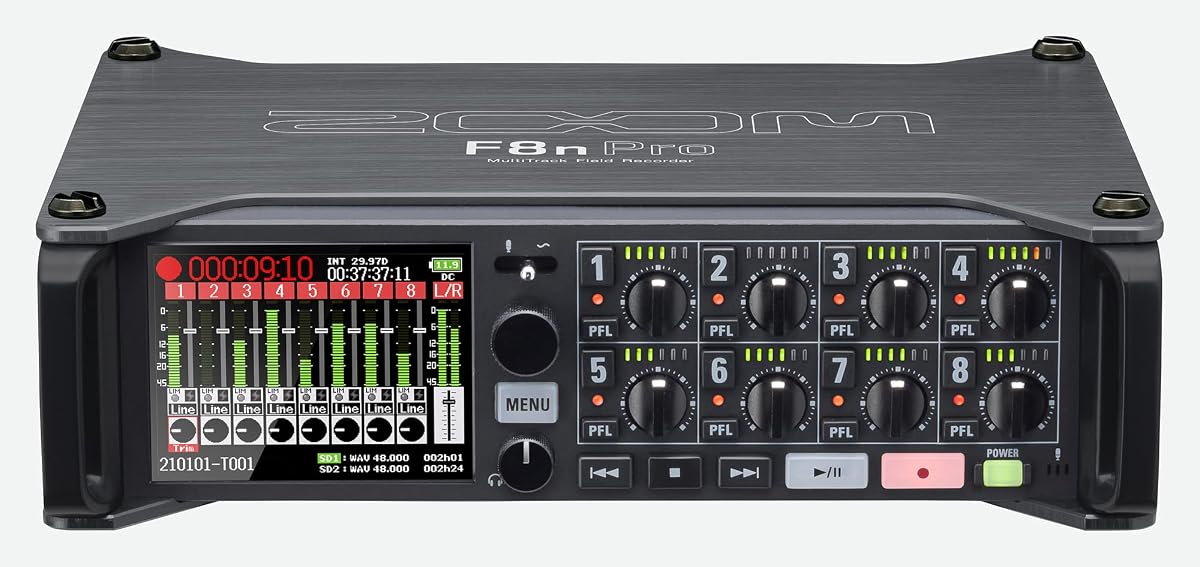
The Zoom F8n Pro is a powerhouse for complex productions needing multiple microphone inputs and reliable synchronization. It combines high gain preamps with 32-bit float for pristine audio capture.
We may earn a commission when you buy through this link, at no additional cost to you.
Dual SD card slots provide essential redundancy, protecting your recordings from data loss during critical takes. The timecode accuracy ensures perfect sync, which is crucial for large-scale film productions.
The unit is heavier and more complex than simpler recorders, requiring dedicated training. It commands a premium price, but for professional workflows, its robustness is unmatched in its class.
Ideal for dedicated sound mixers and large film sets. If you need to record multiple actors or environments simultaneously, this recorder offers the necessary channels and reliability.
Dual SD card slots allow redundant recording to prevent total data loss during critical shoots.
Industry-leading timecode accuracy keeps audio perfectly aligned with video in post-production.
We may earn a commission when you buy through this link, at no additional cost to you.
The Zoom F3 is built for real-world recording where reliability is key. Its compact design makes it ideal for run-and-gun filmmakers needing quick setup and consistent results.
We may earn a commission when you buy through this link, at no additional cost to you.
32-bit float recording ensures dialogue is captured cleanly even if levels shift suddenly. Ultra-low-noise preamps deliver clear audio in unpredictable environments without needing excessive gain.
It lacks the channel flexibility of larger units, so it suits solo operations best. The locking XLR inputs keep connections secure on rigs, preventing accidental disconnections during movement.
Best for documentary crews and run-and-gun productions. It offers professional quality in a small package, prioritizing durability and ease of use over extensive multi-track capabilities.
Its small form factor allows quick setup in dynamic filming environments.
Dual locking XLR inputs keep connections secure when mounted out of reach.
We may earn a commission when you buy through this link, at no additional cost to you.
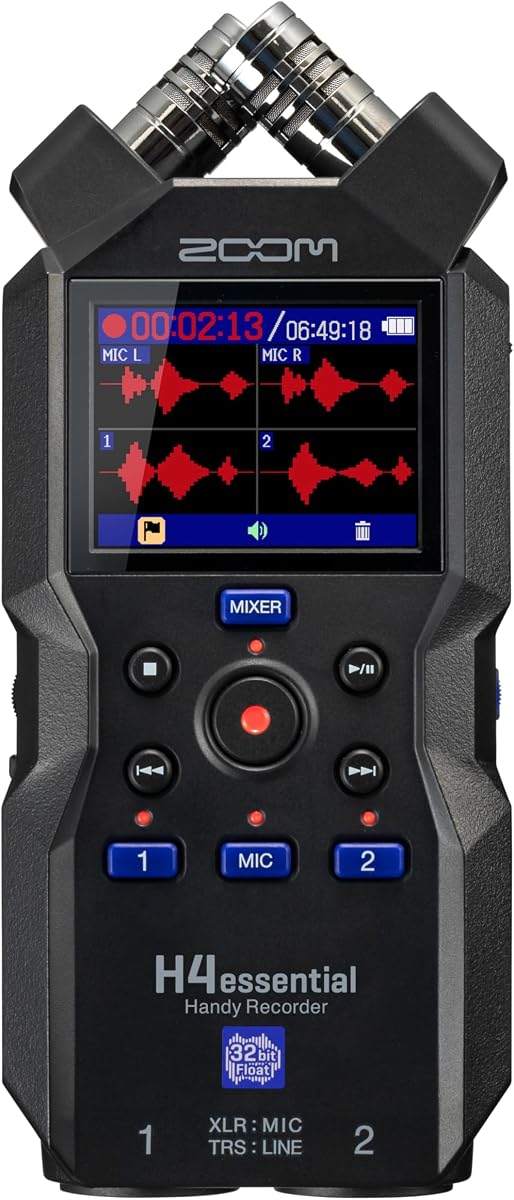
The Zoom H4 Essential helps creators capture more of the moment without worrying about distortion. It provides a 4-track recorder suitable for small projects and live performances.
We may earn a commission when you buy through this link, at no additional cost to you.
You can use built-in stereo microphones or connect external mics for flexibility. USB-C connectivity allows direct recording to devices, making it versatile for both audio and video workflows.
It is less rugged than professional models, but easier to navigate for beginners. The spoken menu guidance helps visually impaired users and makes setup simpler for anyone.
Ideal for podcasters and indie filmmakers needing quick audio capture. Its balance of features and simplicity makes it a strong contender for everyday creative work.
Use built-in mics or connect external gear for versatile recording setups.
Spoken menu guidance makes recording more accessible for users with vision limitations.
We may earn a commission when you buy through this link, at no additional cost to you.
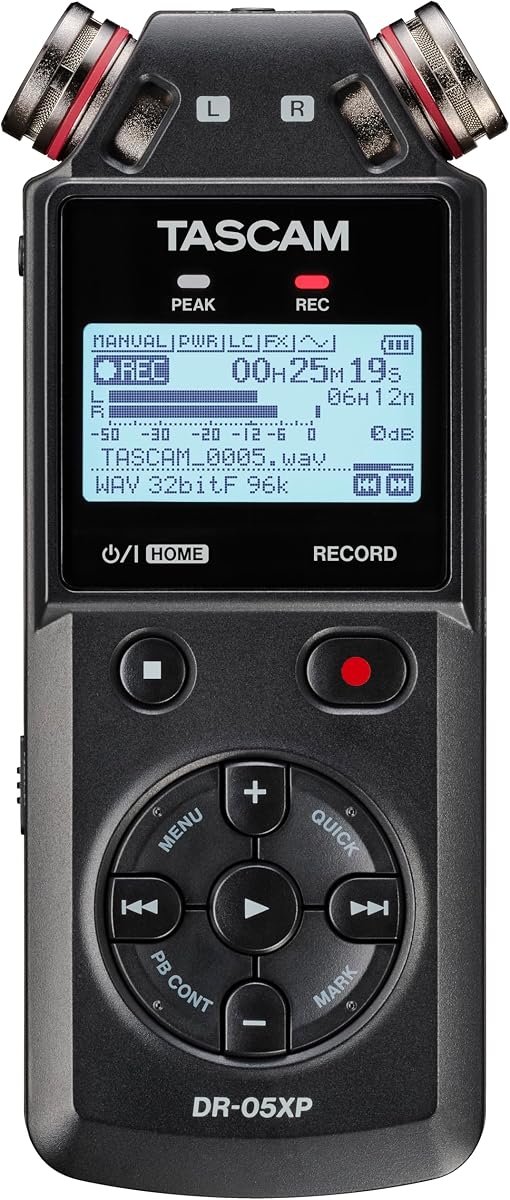
The TASCAM DR-05XP makes capturing pro-quality recordings easy for various tasks. Its portable design is great for quick interviews or ambient sound capture on the go.
We may earn a commission when you buy through this link, at no additional cost to you.
Flexible recording modes include 32-bit float, ensuring clean capture even in loud environments. The built-in omnidirectional microphones handle sources up to 125dB SPL without distortion.
It lacks external XLR inputs for professional mics. However, the USB-C interface allows direct recording to computers, making it a solid option for simple voice or location recording.
Best for solo journalists or hobbyists needing reliable audio. Its simplicity and battery life make it a practical choice for short sessions.
Omnidirectional condenser microphones handle loud environments without clipping.
2-in/2-out USB-C interface supports direct recording to your computer.
We may earn a commission when you buy through this link, at no additional cost to you.
The Zoom H5 uses a system of interchangeable input capsules to adapt to different recording scenarios. This flexibility allows you to swap capsules like camera lenses for different needs.
We may earn a commission when you buy through this link, at no additional cost to you.
It includes a detachable X/Y capsule with shock mounted mics to reduce handling noise. Two mic/line inputs with XLR/TRS connectors add phantom power and -20dB pad options.
While versatile, it relies on AA batteries which can drain during long shoots. The USB interface works well with PCs, making it a reliable hybrid for field and studio use.
Great for multimedia creators needing adaptable recording options. Its modular design provides longevity as your audio needs evolve over time.
Interchangeable input capsules can be swapped out as easily as camera lenses.
Shock mounted mics and X/Y capsules help reduce noise from handling.
We may earn a commission when you buy through this link, at no additional cost to you.
The TASCAM DR-10L Pro simplifies personal audio recording with an included lavalier microphone. It captures superior personal audio from whispers to screams with pro-quality fidelity.
We may earn a commission when you buy through this link, at no additional cost to you.
Firmware updates support LTC Jam Sync for seamless timecode synchronization, ideal for multi-device setups. This feature streamlines post-production workflows significantly for filmmakers and content creators.
It works best for personal audio rather than complex setups. The high capacity media card support ensures you can record long sessions without worrying about storage limits.
Perfect for interviewers and run-and-gun filmmakers needing discrete audio. Its all-in-one kit and timecode support make it a practical tool for quick professional results.
Included clip-on lavalier microphone delivers clear, lifelike audio in busy settings.
LTC Jam Sync support ensures perfect alignment with video in post-production.
We may earn a commission when you buy through this link, at no additional cost to you.
The Zoom H1 Essential captures clear stereo audio perfect for reels and tutorials. It helps your content sound more polished than camera or phone audio alone.
We may earn a commission when you buy through this link, at no additional cost to you.
Detailed sound makes it easy to record rehearsals or live music in the moment. Natural stereo sound helps voices come through clearly for podcasts and interviews.
It lacks external input options and advanced features found in higher-end models. The USB-C connection allows it to function as a desktop microphone for streaming or calls.
Ideal for beginners or simple video productions. It offers a straightforward way to improve audio quality without complex setup or technical knowledge.
Capture clear stereo audio for videos and tutorials that need polished sound.
Natural stereo sound helps voices come through clearly in interviews and podcasts.
We may earn a commission when you buy through this link, at no additional cost to you.
The Zoom F2 is the smallest 32-bit float recorder you can wear discreetly. It captures clip-free audio at any volume without needing to adjust gain during content creation.
We may earn a commission when you buy through this link, at no additional cost to you.
It comes with an omnidirectional lavalier microphone featuring a screw-lock connector and clip. This setup ensures secure placement during interviews, vlogs, and on-camera recordings.
Battery life is impressive with up to 15 hours on two AAA batteries. The internal clock ensures perfect audio and video sync for professional production standards.
Best for vloggers and journalists needing hands-free audio. Its discreet size and long runtime make it ideal for all-day shooting sessions.
Captures clip-free audio at any volume level with 32-bit float technology.
Runs up to 15 hours on just 2 AAA batteries for long shoots.
We may earn a commission when you buy through this link, at no additional cost to you.
Selecting the right field recorder involves balancing inputs, recording quality, and workflow needs.
Consider how many microphones you need to record simultaneously. Multi-channel recorders allow flexibility for dialogue and ambient tracks, while 2-channel models suit simple setups.
Choose inputs based on your typical shoot complexity and mic count.
32-bit float recording provides a safety net against clipping, ensuring clean audio even at high levels. Standard formats like 24-bit are also high quality but require careful gain management.
Look for 32-bit float if you want peace of mind during unpredictable sessions.
Professional film work requires audio and video to stay synced. Timecode I/O or LTC sync ensures your recordings align perfectly with camera footage in post.
Prioritize timecode support if you shoot multi-camera or complex productions.
Field recorders vary from compact handheld units to bulky multi-channel devices. Consider the weight and size based on how much gear you carry daily.
Choose a portable model for run-and-gun work and larger ones for static setups.
SD card support determines how long you can record. Some models support cards up to 1TB or 512GB for extended sessions.
Verify media compatibility to avoid running out of space during critical takes.
Look for flexible power options like AA batteries or external power sources. Long battery life is essential for remote shoots where charging is difficult.
Ensure the recorder can last through your typical filming day without interruption.
Menus and controls should be intuitive, especially when recording on the fly. Spoken guidance or clear displays help prevent mistakes during live action.
Test the interface flow to ensure it suits your quick workflow needs.
USB and headphone outputs allow for direct monitoring and computer integration. Look for 3.5mm inputs or USB-C to ensure compatibility with your existing gear.
Confirm monitoring options allow you to hear what you are recording in real time.
Begin by inserting a compatible memory card and formatting it within the recorder. This ensures the device recognizes the media and prevents write errors during critical takes.
Monitor your audio levels using the built-in display or headphones. Keep levels within optimal range to avoid distortion while maintaining clarity for dialogue capture.
After recording, back up your files immediately to secure storage. Clean the unit with a dry cloth and store it in a protective case to ensure longevity.
32-bit float recorders capture a massive dynamic range that prevents clipping. This means you do not need to adjust gain during recording, ensuring clean audio even if levels spike unexpectedly.
Camera audio is often noisy and lacks clarity. A field recorder provides better preamps and isolation, ensuring your dialogue and ambient sound are professional grade.
Timecode is a timestamp used to synchronize audio with video. It ensures your audio matches your footage perfectly in post-production, especially for multi-camera shoots.
A typical dialogue shoot might need two inputs for boom and lavalier mics. If you capture multiple actors or sound effects simultaneously, four to eight inputs are better.
Many models allow USB connectivity for direct computer recording. This feature lets you record to your DAW or video editing software while streaming or taking calls.
Keep the device in a padded case to prevent physical damage. Remove batteries when not in use to avoid corrosion and store in a dry environment.
The Zoom F6 and F8n Pro lead the pack for professionals needing robust features. Budget-conscious creators will appreciate the reliability of the H1 XLR and H1 Essential.
Prioritize inputs, timecode, and dynamic range based on your production scale. A well-matched recorder ensures your audio quality meets the high standards of modern filmmaking.
Remember to check current availability and details before purchasing. Investing in the right tool will elevate your storytelling and production value significantly.