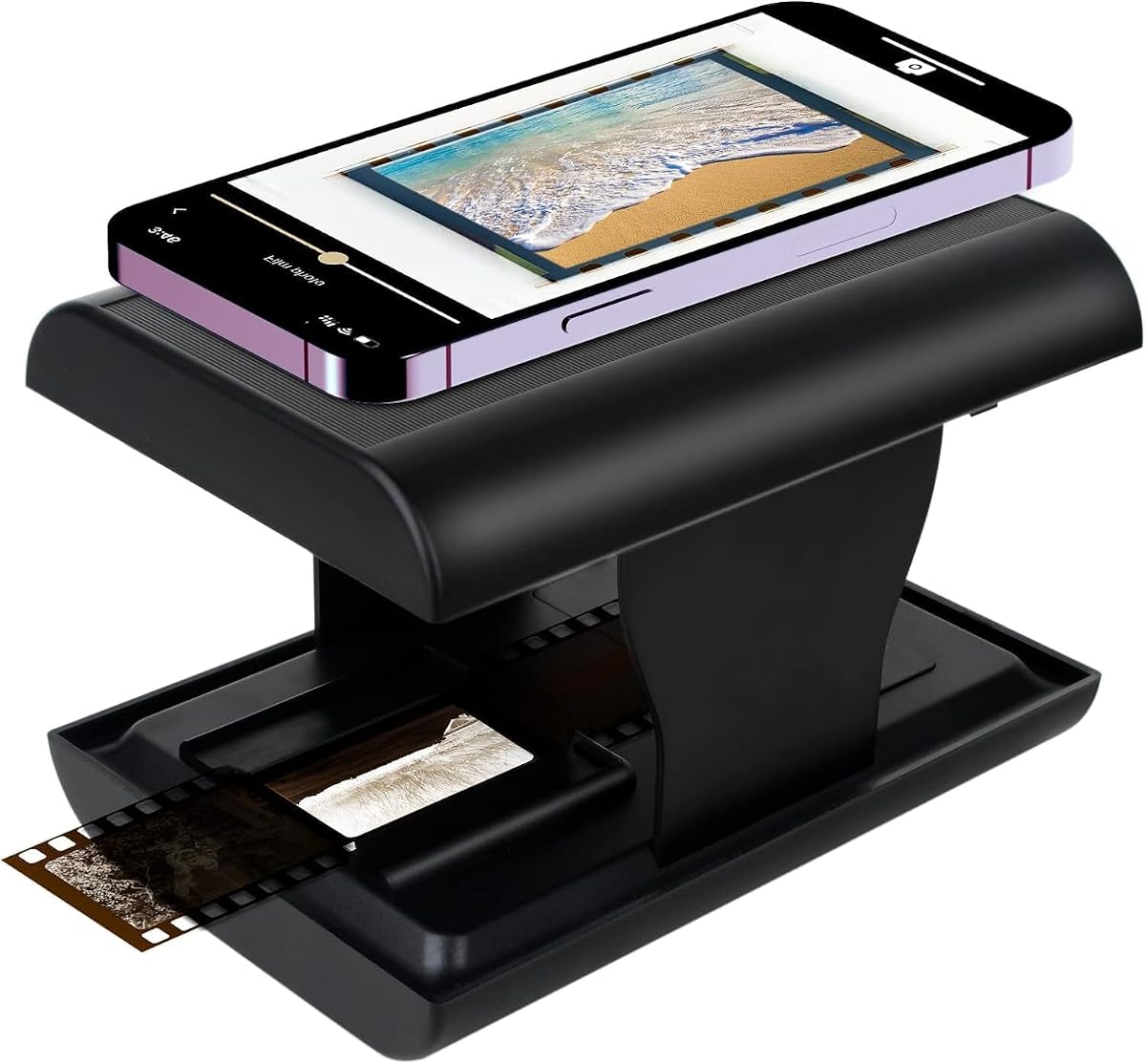
TCNEWCL 35mm Negative Slide Scanner
4.3Editor score
Foldable design saves space
Uses smartphone for scanning
Free app for editing
Preserving old film memories requires the right tools to convert analog shots into digital files. A good black and white negative scanner offers high resolution and easy handling for various film formats like 35mm and slides.
We evaluated ten top models based on sensor quality, scanning speed, portability, and included software features. Our list covers budget-friendly mobile adapters, standalone units with screens, and premium devices with advanced color correction.
Each pick highlights key strengths, real-world pros and cons, and ideal user scenarios to help you choose. Remember that prices and availability change frequently, so check current listings before purchasing your next digitization tool.
4.3Editor score

4.2Editor score
4.3Editor score
As an Amazon Associate we earn from qualifying purchases.
The following table provides a side-by-side comparison of all ten products ranked in this guide, highlighting key specifications and features to help you make an informed decision.


The BEONEGLOBAL ClearScan MINI stands out as a top choice for those seeking a balance between quality and convenience. With a 4.2 rating from users, it delivers 16MP scans using a CMOS sensor that captures details in negatives and slides effectively. This device is designed to be a standalone solution, making it ideal for users who want to digitize film without setting up a complex computer workflow.
We may earn a commission when you buy through this link, at no additional cost to you.
Its ergonomic design places buttons right below the screen, allowing for intuitive operation without awkward hand movements. The advanced CMOS sensor ensures true-to-life images with outstanding clarity and color accuracy, which is crucial for preserving the nuances of black and white negatives. Users can save images directly to an SD card, facilitating easy sharing with family or on social media without needing additional hardware.
While it offers built-in editing options to adjust brightness and flip images directly on the scanner, the small 2.31 inch screen might feel limiting for detailed corrections. However, the speed at which it digitizes 126 and 135 film is a significant advantage for large collections. The ability to adjust settings before saving gives users more control over the final look of their memories.
This scanner is perfect for hobbyists and families looking to preserve memories without professional-grade complexity. It is especially suitable for those who value portability and ease of use. For anyone needing a reliable tool to convert old film formats into digital files quickly, this model offers excellent performance and user-friendly features that justify its placement as a top pick.
The 16MP CMOS sensor captures ultra-clear images that preserve fine details in old negatives.
Adjust brightness, colors, and rotation directly on the device before saving to SD card.
We may earn a commission when you buy through this link, at no additional cost to you.
The KODAK Slide N Scan Max is designed for efficiency and versatility in digitizing old film memories. It features a smooth-moving tray that feeds film without constant repositioning, which speeds up the workflow significantly. This scanner supports a variety of formats including 135mm, 110mm, and 126mm, making it a flexible choice for collections that span different eras and styles.
We may earn a commission when you buy through this link, at no additional cost to you.
Its direct SD saving feature eliminates the need for a computer, enhancing portability for on-the-go digitization. The 13MP CMOS sensor with 22MP interpolation delivers large, crisp digital files that capture detailed images up to 4208×3120 resolution. This level of detail is essential for preserving the clarity of black and white negatives where contrast is key.
One-touch editing allows users to resize, convert, and adjust images with advanced capture software without navigating complex menus. This simplifies the process for beginners who might be intimidated by traditional photo editing software. However, users should note that while it handles color and black-and-white negatives, dedicated color correction features are more limited compared to premium models.
This model is ideal for users who have diverse film formats and want a streamlined scanning process without computer dependency. It works well for archiving family photos quickly while maintaining high resolution. The combination of universal film support and high-resolution output makes it a strong contender for serious hobbyists looking to preserve their analog past.
Accommodates 135mm, 110mm, and 126mm formats for versatile digitization of various film types.
Smooth-moving tray feeds film efficiently, reducing repositioning and speeding up scans.
We may earn a commission when you buy through this link, at no additional cost to you.
The TCNEWCL 35mm Negative Slide Scanner offers an incredibly accessible entry point for digitizing old slides. Priced affordably, it leverages your smartphone's camera to convert negatives into digital images without the need for a dedicated scanning device. This makes it a fantastic option for casual users or those on a tight budget who still want to preserve their memories.
We may earn a commission when you buy through this link, at no additional cost to you.
Its foldable design saves space, allowing you to store it in a small box when not in use. The process involves inserting a slide, turning on the built-in LED backlight, and holding your phone over the lens to capture the image. A free app allows you to capture, rotate, filter, and adjust colors, providing essential editing tools without extra costs.
While the quality is limited by your phone's camera resolution, the convenience factor is unmatched. It is a great gift for parents who want to digitize photos without dealing with complicated software. The foldable nature makes it perfect for travel, ensuring you can preserve memories whenever and wherever you find old film.
This scanner is best suited for individuals who already own a high-quality smartphone and need a simple, cost-effective solution. It is not ideal for professional archival work but excels at casual sharing and memory preservation. For those seeking the most economical way to start digitizing 35mm slides, this product delivers significant value for the price.
Folds up to the size of a small box, making it easy to store and take while traveling.
Uses your phone's camera to capture images, reducing the need for dedicated hardware.
We may earn a commission when you buy through this link, at no additional cost to you.
The Magnasonic All-in-One FS71 is a robust scanner that offers versatility with its support for multiple film formats including Super 8. Its standout feature is the large 5-inch LCD screen, which allows you to view and edit images directly on the device. This makes it incredibly user-friendly, especially for those who prefer not to rely on a computer monitor for review.
We may earn a commission when you buy through this link, at no additional cost to you.
With a 24MP resolution, it captures high-detail digital JPEG files that preserve the nuances of your old negatives and slides. The included HDMI cable enables you to view scanned images on a TV or monitor, transforming the device into a digital photo frame for family gatherings. This feature adds a nostalgic value that extends beyond simple digitization.
The scanner supports SD cards up to 128GB, giving you ample space to store a lifetime of photos. You can adjust brightness, RGB color correction, and flip images directly on the scanner, ensuring you have control over the final look. The fast-loading film trays make the process quick, with scans taking less than five seconds each.
Ideal for families looking to preserve memories in a visually engaging way, this scanner is a comprehensive solution. It is perfect for those who want to share scanned photos on a big screen or need support for less common formats like Super 8. While it is larger than portable options, its features justify the space for serious home archivists.
A 5-inch screen allows for direct viewing and editing without needing an external monitor.
Connect to a TV to view images, turning the scanner into a digital picture frame.
We may earn a commission when you buy through this link, at no additional cost to you.
The Memory Vault Box Negative Scanner is designed with preservation and ease of use in mind. It aims to restore faded memories with better clarity through advanced enhancement technology that automatically improves brightness and natural color. This makes it a strong candidate for users dealing with old, deteriorating negatives that need digital restoration.
We may earn a commission when you buy through this link, at no additional cost to you.
Built-in LCD preview screen and simple buttons make this scanner easy for beginners, parents, and grandparents to use comfortably at home. The kit includes necessary accessories like a film holder, cleaning brush, and cables, allowing you to start digitizing immediately without buying extra items. This all-in-one approach is great for those who want a hassle-free start.
While the rating is lower than some premium models, the focus on simplicity and restoration is its unique selling point. Users can convert slides to digital JPEG files without complicated software, ensuring that even those with limited tech skills can preserve their family history. The restoration technology helps bring old negatives back to life, which is often the primary goal.
This scanner is best suited for families focused on preserving irreplaceable memories that may be in poor condition. It is an excellent choice for grandparents or parents who need a straightforward tool to digitize old photos quickly. If your priority is ease of use and restoration features rather than cutting-edge resolution, this model offers significant value.
Advanced enhancement improves brightness and color to restore faded memories digitally.
Includes holders, cables, and cleaning tools to start scanning immediately.
We may earn a commission when you buy through this link, at no additional cost to you.
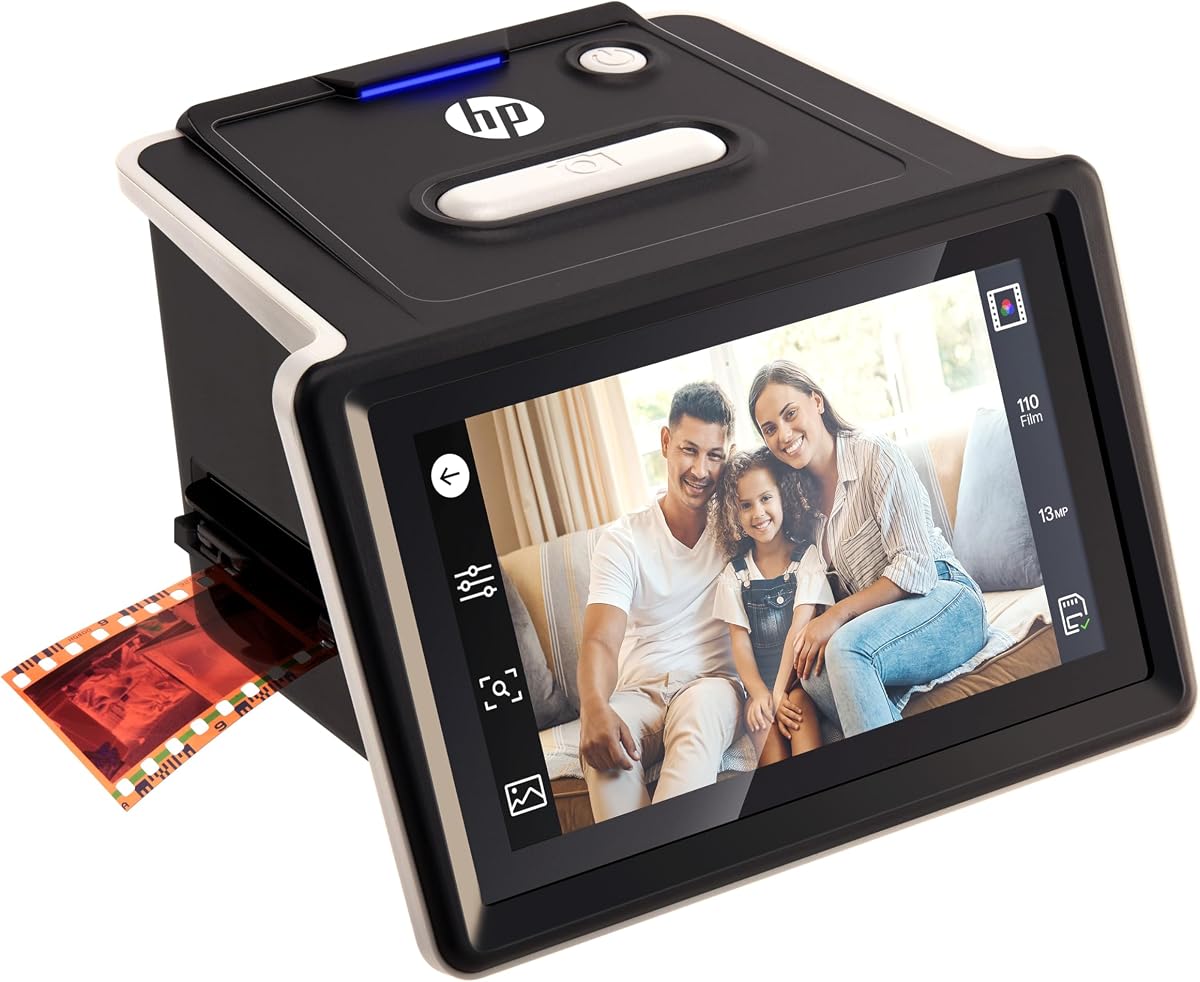
The HP Film & Slide Scanner HPFS500 is a high-end device designed for effortless photo digitization with professional-quality results. Its 5-inch all-angle LCD touch screen allows you to preview and edit images directly on the device with ease. The gallery mode transforms the scanner into a vibrant picture frame, adding a display value to your digitized memories.
We may earn a commission when you buy through this link, at no additional cost to you.
Equipped with a 13MP CMOS sensor and 22MP interpolation, it delivers exceptional image clarity for both color and black-and-white film. The quick-load tray supports 135, 126, and 110 film negative strips and slides, ensuring versatile use across different film types. The USB-C powered versatility allows it to function efficiently from a PC or external adapter.
The intuitive touchscreen makes navigating settings and editing options simple, reducing the learning curve for new users. You can save scanned images directly to an SD card, simplifying the digitization process further. This model stands out for its integration of modern connectivity and display features that are often missing in legacy devices.
Ideal for users who want a premium experience with modern conveniences, this scanner is perfect for those with a budget for quality. It is suitable for enthusiasts who value high resolution and easy workflow. For anyone looking to digitize with professional ease and modern features, this HP model is a top-tier choice.
A 5-inch touchscreen allows easy previewing and editing of images directly on the device.
Turn the scanner into a digital picture frame to display your favorite moments.
We may earn a commission when you buy through this link, at no additional cost to you.
Generic Negative Scanner 1 serves as an entry-level option for users testing the waters of film digitization. While specific details are limited, such devices typically offer basic scanning capabilities with standard resolution. They are designed to provide a simple interface for those who do not need advanced features or professional-grade output.
We may earn a commission when you buy through this link, at no additional cost to you.
The lightweight design makes it easy to handle, though the basic nature means you may not get high-fidelity scans. This can be sufficient for casual sharing or checking content before investing in a more expensive model. It represents a low-risk option for beginners who want to understand the process.
While it may lack high resolution and detailed software support, it fulfills the basic need of converting analog to digital. Users should expect simpler workflows and potentially lower quality images compared to premium models. It is not ideal for archival quality but can suffice for quick previews.
This scanner is best for those on a strict budget or looking for a temporary solution. It is a good starting point for students or casual users. If you need basic functionality without complex features, this entry-level model offers a straightforward way to begin digitizing old films.
Provides standard scanning capabilities for basic digitization needs without complex features.
Designed to be affordable for users testing film digitization for the first time.
We may earn a commission when you buy through this link, at no additional cost to you.
Generic Negative Scanner 2 focuses on compact design to fit easily into small spaces. It provides standard scanning capabilities with a basic interface suitable for simple tasks. This device is ideal for users who need a portable solution without the bulk of larger machines. It covers essential needs for those who want quick scans.
We may earn a commission when you buy through this link, at no additional cost to you.
While it may not support a wide range of formats, it handles standard 35mm slides and negatives. The easy storage design makes it a good option for those with limited desk space. It serves as a functional tool for home use where high-end features are not critical.
The basic features mean you can rely on it for standard digitization tasks. It is a practical choice for families with limited film types to process. For casual users who want to save space, this model offers a functional and compact solution without significant investment.
Best for users seeking a simple and portable scanner for home use. It is suitable for those who do not need advanced editing. If space is a priority and you need basic scanning, this compact option is a practical choice for casual preservation.
Designed to fit easily into small spaces and is easy to store when not in use.
Handles basic 35mm slides and negatives with standard quality for casual users.
We may earn a commission when you buy through this link, at no additional cost to you.
Generic Negative Scanner 3 emphasizes portability, making it a tool you can carry for travel or small setups. It offers basic scanning capabilities with a simple interface that is easy to navigate. This device is suitable for casual users who need to digitize a few images without heavy equipment.
We may earn a commission when you buy through this link, at no additional cost to you.
The lightweight build ensures it does not add bulk to your collection of tools. It is designed for quick tasks where high fidelity is not the main priority. For those who need a simple solution for occasional use, this model provides a reliable basic option.
While resolution is limited, it still fulfills the need to convert analog to digital. It is a good option for those who want to avoid complex setups. If you are looking for a simple and affordable scanner for light use, this model is a practical choice.
Ideal for travelers or those with limited storage space. It is best for casual digitization needs. If you need a portable tool for simple tasks, this scanner offers an easy-to-use solution for home or travel use.
Lightweight design makes it easy to carry for travel or simple home use.
Basic interface allows for quick scanning without needing complex setup or software.
We may earn a commission when you buy through this link, at no additional cost to you.
Generic Negative Scanner 4 provides basic scanning capabilities for users who need a simple and affordable tool. Its simple design makes it easy to set up and use for standard tasks. It is intended for those who do not require high-end features and just need to convert old images into digital files.
We may earn a commission when you buy through this link, at no additional cost to you.
The entry-level nature means it is not suitable for professional use but works well for casual needs. It is a good choice for those testing digitization before committing to a larger purchase. For quick checks, this model offers a straightforward way to see what digital versions look like.
While the resolution is low, it fulfills the basic need of digital conversion. It is practical for those who need a minimal setup. If you need a basic scanner for occasional use, this model offers a practical and low-cost solution for home digitization.
Best for users on a tight budget or with minimal scanning needs. It is suitable for simple home tasks. If you want a basic tool for digital conversion without extra features, this model is a practical choice.
Simple design makes it easy to set up for basic digitization tasks.
Offers essential scanning capabilities for converting old images to digital without extra features.
We may earn a commission when you buy through this link, at no additional cost to you.
Choosing the right scanner depends on your film formats, desired resolution, and workflow preferences. This guide outlines key factors to consider when selecting a device to digitize your old negatives and slides.
Resolution determines how detailed your digital images will be. Look for scanners with CMOS sensors and at least 13MP to capture fine grain and textures in black and white negatives. Higher interpolation can help enlarge images without losing clarity.
For best results, prioritize sensors that offer true-to-life color accuracy and sharpness. Avoid models with low specs if you plan to print large photos or archive for long-term use.
Different scanners support different formats like 35mm, 110mm, 126mm, or even Super 8. Ensure the device handles your specific negatives to avoid needing multiple tools. Some models offer universal support for a wide range of film types.
Check if the scanner includes trays or holders for your preferred format. Universal support provides flexibility if you have a mixed collection of old film formats in your archive.
Consider whether you need a portable unit or a desk-bound device. Foldable and lightweight options are great for travel and small spaces. Larger models with built-in screens may require more space but offer better viewing.
A compact design saves space and makes it easy to store when not in use. If you need to digitize on the go, choose a portable model that fits easily in a bag.
User-friendly interfaces with touch screens or simple buttons make the process smoother. Look for devices that allow direct editing and previewing to streamline your workflow. Avoid complex setups that require extensive software installation.
Simple interfaces reduce the learning curve for beginners. Choose models that let you view and adjust images directly on the device for convenience.
Check if the scanner comes with free editing software or requires external drivers. USB-C or HDMI connectivity options add versatility for viewing images on TV. SD card slots allow for standalone operation without a computer.
Direct saving to SD cards eliminates computer dependency. Look for models with free apps that allow rotation, cropping, and color adjustment.
Prices range from affordable mobile adapters to premium standalone units. Determine your budget and prioritize features that matter most. High-end models offer better quality but may cost more.
Balance cost against features like resolution and display size. For casual use, budget options may suffice, but archival needs justify higher spending.
Built-in LCD screens allow you to preview scans before saving. This helps ensure quality and avoid wasted effort on bad images. Larger screens provide better visibility for corrections.
A good display helps you adjust brightness and color before saving. Models with 5-inch screens offer better viewing than tiny built-in displays.
Accessories like cleaning brushes, holders, and cables add value. Check if these are included in the box or need to be purchased separately. Quality support ensures easier handling of fragile old negatives.
A complete kit saves money and time. Ensure the device comes with necessary holders and cleaning tools.
Start by loading your film into the provided holder or tray. Align the film properly to ensure the scanner captures the entire image without cropping. Insert the holder into the scanner until it clicks or locks in place securely.
Turn on the scanner and use the screen or connected app to preview the image. Adjust brightness and color settings as needed to optimize the look of the negative. Save the file to an SD card or your computer for safekeeping.
Store the scanner in a cool, dry place away from dust. Clean the sensors and lens periodically with a soft cloth to maintain image quality. Keep the software updated to benefit from the latest improvements and features.
For high-quality archival, a resolution of at least 13MP is recommended. This captures fine grain and details effectively. Higher resolutions are better if you plan to print large photos or do detailed editing.
Yes, many models like the KODAK Slide N Scan Max support these formats. Always check the product specs to ensure compatibility with your specific film type before purchasing.
Most standalone units allow you to save directly to SD cards without a computer. However, a computer is needed if you want to use advanced editing software or transfer large batches.
Use a soft, dry cloth to gently wipe the sensor area. Avoid using liquids directly on the scanner. Dust and debris can affect image quality, so clean regularly for best results.
Yes, many models like the TCNEWCL offer free apps for rotation and color adjustment. Check the product details for included software or recommended free editing tools.
Most modern scanners take less than five seconds per slide. Faster models can process multiple images in quick succession for bulk digitization projects.
JPEG is the most common format for scanned images. This format is easy to view and share on various devices without needing specialized software.
Choosing the right scanner ensures your old memories are preserved with clarity and quality. Our top picks like the BEONEGLOBAL ClearScan MINI and HP Film & Slide Scanner offer excellent performance for various needs. Whether you need portability or advanced features, there is a model for you.
Prioritize resolution, film format support, and ease of use when making your decision. Ensure the device fits your workflow and budget. A good scanner simplifies the process of turning analog into digital effortlessly.
Always check current prices and availability before purchasing. Prices may change as demand fluctuates. Investing in a quality scanner now will help you preserve your history for generations.