
PalliPartners Compound Microscope
4.3Editor score
Up to 2000X magnification
Dual LED illumination system
Includes 28 specimen slides
This guide compares the top microscopes for soil microbes helping you choose the right magnification optics and lighting to observe bacteria fungi and protozoa
Exploring the hidden world of soil microbes requires a reliable microscope capable of high magnification and clear optics. Whether you are a student hobbyist or researcher finding the right tool is essential for accurate observation.
We evaluated ten top models based on optical quality magnification range lighting systems and ease of use. Our comparison focuses on features that matter most for viewing tiny soil organisms like bacteria and protozoa.
Each pick below highlights specific strengths from budget friendly options to professional grade trinocular systems. Note that product availability and features may change so verify details before purchasing.
4.3Editor score

4.2Editor score

4.6Editor score
The following table provides a side by side comparison of all ten models evaluating their magnification capabilities optical features and included accessories to help you decide quickly.
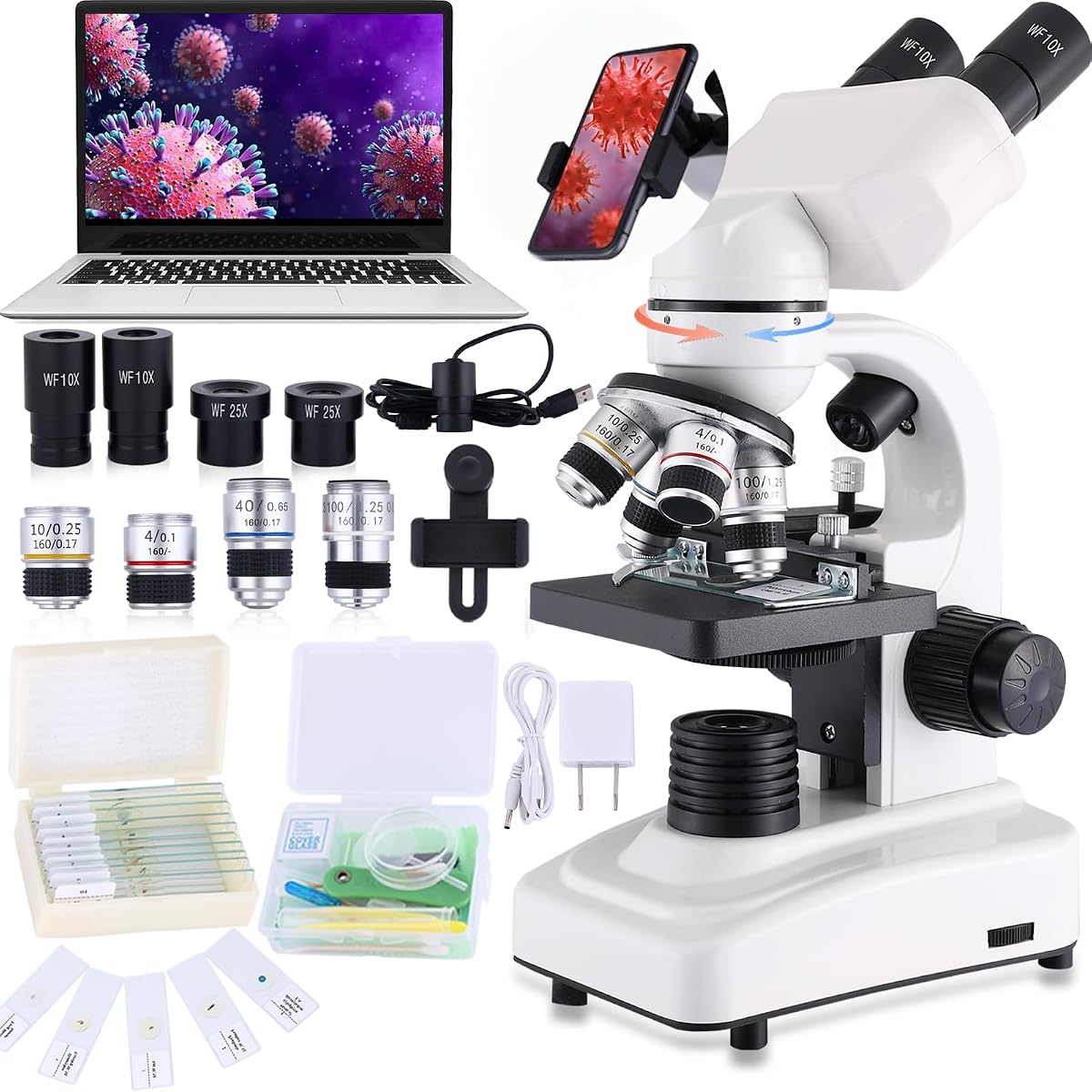


This PalliPartners microscope offers excellent value for beginners wanting to explore soil microbes. With magnification up to 2000X it delivers clear views of cellular structures.
We may earn a commission when you buy through this link, at no additional cost to you.
The dual LED lighting system allows observation of both transparent and opaque specimens. Included slides and tools make it ready to use straight out of the box.
While it lacks binocular viewing the optics are clear for the price. The coaxial focus knobs provide smooth adjustment which is vital for detailed soil sample analysis.
Ideal for students and hobbyists this model bridges the gap between toy scopes and professional equipment. It is a practical choice for those starting their microbiology journey.
Top and bottom LEDs let you inspect opaque soil particles and translucent cells separately for better contrast.
Includes pre-prepared slides and blank ones for DIY samples ensuring immediate experimentation without extra purchases.
We may earn a commission when you buy through this link, at no additional cost to you.
This binocular microscope reduces eye fatigue during long observation sessions of soil samples. Its wide-angle eyepieces provide a larger field of view for easier scanning.
We may earn a commission when you buy through this link, at no additional cost to you.
The auto fill light design ensures consistent illumination without manual tweaking. A two-layer mechanical stage allows precise X-Y movement for tracking microorganisms.
Though it is heavier than simpler models the stability helps maintain focus. The telescopic lens protection prevents accidental contact with specimens during adjustments.
Best for users planning extended study sessions this model balances comfort and optical performance. It is a solid choice for serious amateurs and classroom labs.
Binocular eyepieces with wide-angle optics reduce strain when observing complex soil samples for extended periods.
Mechanical stage knobs allow accurate positioning of slides which is crucial for locating rare microbes.
We may earn a commission when you buy through this link, at no additional cost to you.
This kit stands out for its inclusion of dissecting tools alongside standard microscope accessories. It supports both viewing and physical manipulation of specimens.
We may earn a commission when you buy through this link, at no additional cost to you.
The binocular eyepieces offer comfortable viewing while the phone clip allows easy documentation of findings. Dual LED lights ensure specimens are well lit.
While robust it requires adult supervision for younger users. The manual focus system is reliable but lacks motorized assistance found in higher end models.
A versatile option for those wanting to dissect as well as view soil samples. It is great for educational settings needing hands-on science activities.
Includes hatching box and collection bottles enabling full lifecycle studies of soil organisms.
Universal phone clip adapter makes it simple to capture images for sharing or record keeping.
We may earn a commission when you buy through this link, at no additional cost to you.
This trinocular model adds a third port for camera connection enabling digital imaging of soil microbes. The 5000X magnification reveals fine details like bacterial shapes.
We may earn a commission when you buy through this link, at no additional cost to you.
Achromatic objectives eliminate color aberrations for sharper images. The included USB camera and software make documentation straightforward for reports or presentations.
The extensive gift pack covers all necessary tools from slides to cleaning wipes. However it requires a computer setup which limits portability.
Perfect for researchers or students needing digital records this microscope offers professional features at a competitive price. It is ideal for lab environments.
HD USB camera allows live streaming or recording of microbes on a computer screen for analysis.
Infinity optical system and achromatic lenses ensure high clarity even at maximum magnification levels.
We may earn a commission when you buy through this link, at no additional cost to you.
The trinocular head allows one person to view while another looks through the eyepieces simultaneously. This is excellent for teaching or collaborative observation.
We may earn a commission when you buy through this link, at no additional cost to you.
A double-layer stage keeps slides secure during adjustments ensuring consistent focus. Dual LEDs provide flexible lighting for various specimen types.
Although it tops out at 2000X it handles most soil microbe studies well. The lack of an included camera means you need separate accessories for imaging.
Great for classrooms or group projects this model facilitates interaction. It is a solid choice for those prioritizing shared viewing over high-end digital features.
Trinocular design lets teachers and students observe specimens together enhancing the learning experience.
Double-layer stage structure prevents slide movement for sharper imaging during long sessions.
We may earn a commission when you buy through this link, at no additional cost to you.
This model offers high magnification capable of revealing minute details in soil samples. Its 8 core design includes features like adjustable diopter and wide-field optics.
We may earn a commission when you buy through this link, at no additional cost to you.
The digital eyepiece allows easy imaging without external cameras. Dual mechanical stages ensure precise slide movement for locating small organisms.
While feature rich it can be intimidating for beginners. The learning curve is steep but rewards users with advanced functionality.
Ideal for advanced hobbyists or lab use this microscope delivers professional results. It is a powerful tool for detailed biological research.
Wide-field eyepieces and adjustable refractive index provide a comfortable viewing experience for different users.
Double-layer stage allows X and Y axis adjustments for accurate specimen positioning.
We may earn a commission when you buy through this link, at no additional cost to you.
This handheld microscope is perfect for quick field checks of soil samples. Its WiFi connectivity lets you view images directly on smartphones or tablets.
We may earn a commission when you buy through this link, at no additional cost to you.
Eight adjustable LEDs provide enough light for most handheld observations. It is lightweight and easy to carry making it ideal for outdoor exploration.
However the 1000X limit may not suffice for tiny bacteria. It works best for larger organisms like protozoa or soil mites.
Best for on-the-go use this model sacrifices power for convenience. It is a great secondary tool for casual exploration or travel.
Lightweight design allows easy transport for outdoor soil sampling and immediate viewing.
WiFi hotspot connects to mobile devices enabling instant photo capture and sharing.
We may earn a commission when you buy through this link, at no additional cost to you.
This microscope includes a color filtering disc to enhance contrast in specimens. It is designed for educational use with a straightforward setup process.
We may earn a commission when you buy through this link, at no additional cost to you.
Dual LEDs and a complete accessory kit make it ready for classroom activities. The magnification range covers most basic biological needs.
Optical quality is decent but not exceptional. Some users report difficulty achieving sharp focus at higher magnifications.
Best for budget-conscious schools or home education this model offers basic functionality. It is a viable starter option if optics are not critical.
Built-in disc filter wheel allows contrast enhancement for different specimen types and cellular structures.
Includes phone adapter blank slides and cover slips ensuring immediate use without extra purchases.
We may earn a commission when you buy through this link, at no additional cost to you.
This research grade model offers exceptional build quality and a highly rated performance. The variable diaphragm allows precise light control for optimal contrast.
We may earn a commission when you buy through this link, at no additional cost to you.
A 1.3MP camera and USB output facilitate professional documentation. Mechanical stages ensure stable and accurate positioning of slides.
It is heavier and more complex than entry-level models but delivers superior clarity. The investment is justified for serious study.
Ideal for professionals and advanced students this microscope sets a high standard. It is the top choice for those needing reliability and detail.
Variable diaphragm regulates light intensity allowing better contrast and clarity in specimens.
1.3MP camera and USB connection allow high-resolution capturing and sharing of microscopic images.
We may earn a commission when you buy through this link, at no additional cost to you.
This model features a USB electronic eyepiece for easy image capture without a separate camera. It offers dual light sources for flexible viewing.
We may earn a commission when you buy through this link, at no additional cost to you.
Coaxial focus knobs provide smooth and precise adjustments. The optical system delivers clear images for routine observation tasks.
Electronic eyepiece performance may vary depending on software. Accessory range is limited compared to full kits but functional.
Best for users wanting digital integration with traditional optics this model works well. It is a practical tool for quick imaging needs.
USB electronic eyepiece simplifies image capture and transfer to PC for analysis.
Dual light sources ensure versatility for viewing various specimen types and colors.
We may earn a commission when you buy through this link, at no additional cost to you.
Selecting the right microscope requires considering several key factors to ensure you can observe soil microbes effectively.
Soil microbes vary in size so a range of 400X to 2000X is ideal. Lower mag covers protozoa while higher is needed for bacteria.
Look for models offering at least 1000X magnification to see fine details clearly.
Achromatic lenses reduce color distortion and improve clarity. Quality optics are critical for distinguishing tiny organisms.
Prioritize microscopes with achromatic objective lenses for better imaging.
Dual LED lighting systems allow viewing both opaque soil and transparent cells. Adjustable brightness helps optimize contrast.
Choose a model with top and bottom LEDs for versatility.
Monocular microscopes are simpler but binocular ones reduce eye strain. Trinocular models allow camera connection for documentation.
Consider your comfort and need for digital imaging when choosing.
A mechanical stage with X-Y movement helps track organisms accurately. Stability ensures slides do not shift during viewing.
Look for double-layer stages for better slide retention.
Kits with slides and tools save time and money. Prepared slides can help you learn what to look for.
Check that necessary tools like coverslips and tweezers are included.
USB cameras or electronic eyepieces enable sharing and recording. This is useful for reports or monitoring changes over time.
Decide if you need to capture images before purchasing.
Sturdy construction ensures longevity and accurate optics. Safety certifications like SGS guarantee non-toxic materials.
Verify build quality and safety standards especially for home use.
First start by preparing a thin layer of soil on a slide. Add a drop of water and cover with a coverslip to flatten the sample.
Second adjust the lighting and focus slowly using the coarse then fine knobs. Move the stage to locate organisms and center them for detail.
Third clean the lenses with a soft cloth after each use. Store the microscope in a dry place to prevent dust buildup.
Bacteria are tiny and usually require at least 1000X to 2000X magnification for clear visibility. Lower magnification may not resolve their shapes well. Use high power objective lenses for best results.
Not all microscopes are suitable for soil as dirt can clog lenses. Models with dual lighting and stable stages work better. Ensure the microscope can handle opaque samples too.
Monoculars are simpler and cheaper but binoculars reduce eye strain during long sessions. Beginners might start with monocular and upgrade later. Choose based on comfort needs.
Place a small amount of soil on a slide add water and cover with a coverslip. Ensure the layer is thin to allow light to pass through. Blot excess liquid gently.
No but cameras help document findings. Many models offer USB camera ports. If sharing data is important invest in one with digital capabilities.
Dual LED systems provide adjustable brightness and contrast. Top light helps with opaque particles while bottom light suits transparent cells. Look for models with both.
We reviewed ten microscopes ranging from budget friendly kits to professional trinocular systems. Each model offers unique strengths for different observation needs.
Prioritize optical quality and illumination type when deciding. Ensure the magnification range suits the size of organisms you plan to study.
Check current availability and verify specs before buying. With the right tool you can uncover the fascinating life hidden in soil samples.